
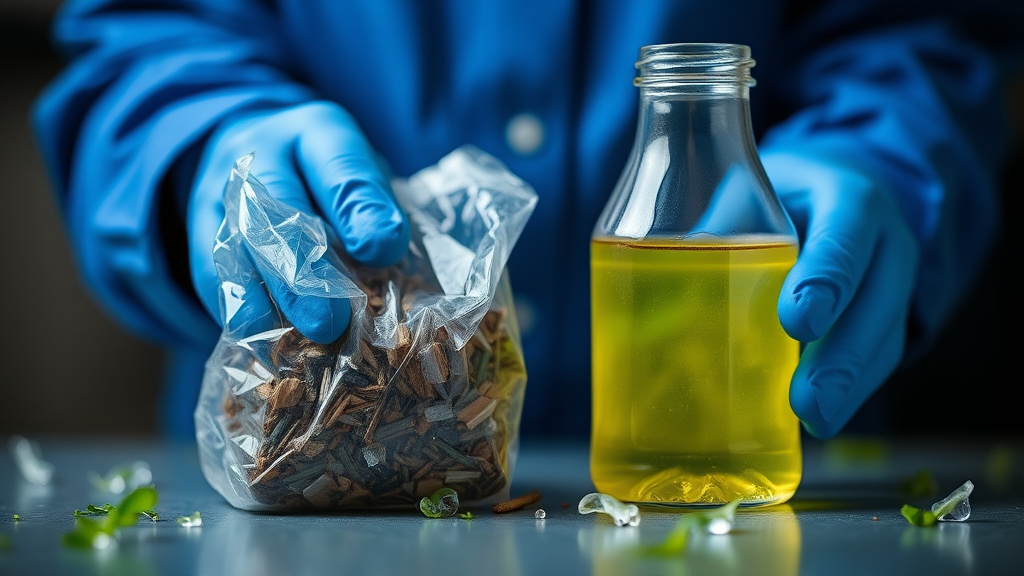
In a groundbreaking breakthrough for environmental protection, scientists have engineered a revolutionary plastic alternative using agricultural waste that would otherwise be deposited in landfills. This cutting-edge material aims to tackle the global plastic crisis while transforming how we handle farming waste materials. Discover how scientists are turning crop residues into durable, biodegradable polymers that could reshape industries worldwide. Learn about the creation methodology, potential applications, and the ecological impact of this game-changing technology that may finally offer a practical alternative to our planet’s plastic pollution problem.
The Problem with Conventional Plastic Materials
Traditional plastics have become an environmental crisis of unprecedented scale. Derived primarily from fossil fuels, standard plastic manufacturing plays a major role in greenhouse gas emissions and global warming. Once manufactured, these materials remain in our environment for centuries, fragmenting into microplastics that pollute soil, water systems, and wildlife habitats. The worldwide plastic waste crisis has become critically severe, with millions of tons accumulating in landfills and oceans each year, devastating ecosystems and endangering public health through the food chain.
The financial and societal costs of plastic reliance extend far beyond ecological harm. Existing recycling systems falls short, with only a small portion of manufactured plastics being appropriately handled, while the bulk experiences burning or waste disposal. Producing conventional plastics requires substantial energy resources and produces harmful toxic compounds. Additionally, developing nations often shoulder the weight of affluent nations’ plastic refuse, creating environmental injustice. This unsustainable cycle demands innovative alternatives that can decrease our dependence on petroleum-based materials while addressing the mounting global waste crisis.
Novel Method from Agricultural Waste
Researchers have successfully transformed agricultural byproducts such as corn cobs, straw residue, and bagasse fiber into a workable plastic substitute through advanced chemical processing. This innovative approach reduces waste generation while producing eco-friendly materials that match traditional plastic performance. The resulting biopolymer demonstrates remarkable durability, flexibility, and strength, making it suitable for various industrial uses. By transforming farm residues into valuable resources, this solution tackles two critical environmental challenges simultaneously: decreasing landfill waste and lowering dependence on fossil fuel plastics. This advancement represents a significant step toward circular economic practices in farming.
How the Technology Works
The procedure starts with gathering and processing agricultural waste materials through washing and dehydration procedures. Scientists then apply specialized enzymatic and chemical processes to decompose cellulose and lignin elements into reduced molecular structures. These extracted polymers are subsequently refined and processed into pellets designed for production. Advanced catalysts speed up the conversion process while maintaining material quality and consistency. The resulting biopolymer displays properties comparable to conventional plastics while retaining complete biodegradability within several months.
Temperature and pressure controls are critical throughout the restructuring process, ensuring ideal molecular restructuring. Researchers leverage cutting-edge spectroscopy and chromatography techniques to track conversion efficiency and material composition. The technology demands minimal chemical additives, minimizing environmental contamination risks markedly. Scalability studies indicate that the process can be scaled for commercial-scale production without compromising quality. This efficiency makes commercial viability highly feasible for agricultural regions worldwide.
- Enzymatic breakdown breaks down cellulose into fermentable sugars effectively
- Chemical catalysts speed up polymer chain assembly and cross-linking processes
- Temperature regulation maintains molecular integrity during processing
- Quality assurance protocols ensure uniform material characteristics and operational performance
- Waste byproducts from production are minimal with recyclable potential
Upcoming Uses and Effects
The possible uses for this agri-waste plastic reach well outside traditional packaging solutions. Industries stretching from automotive manufacturing to electronic devices are examining implementation opportunities. Early projections suggest widespread adoption could decrease worldwide plastic waste by significant quantities each year. Healthcare equipment, construction materials, and textile manufacturing constitute additional sectors poised to benefit. As manufacturing volumes increase, manufacturing costs are projected to drop significantly, making this eco-friendly option price-competitive with standard fossil fuel-based plastics over the coming five years.
The environmental impact of commercializing this innovation should not be underestimated. By utilizing agricultural residues that presently break down in farmland or are burned, releasing greenhouse gases, researchers estimate a substantial reduction in greenhouse gas output. Farmers create new revenue sources from waste valorization, strengthening rural economies. Natural decomposition ensures less waste in landfills and marine contamination. Governments worldwide are already considering policy structures to incentivize adoption. This breakthrough constitutes a fundamental change toward sustainable resource cycles, demonstrating how research and development can tackle at the same time dealing with waste, global warming, and economic development challenges globally.
